For many children growing up in rural Limpopo, early childhood comes with invisible obstacles. Limited stimulation, few age-appropriate educational tools, and under-resourced crèches make learning harder. Yet the earliest years are the most important. During this time, a child’s brain forms more than a million neural connections every second. This window of opportunity must not be missed.
Recognizing this, DAKTARI Bush School & Wildlife Orphanage has taken action. Therefore, the organisation is known for protecting wildlife and educating youth on conservation. Now, DAKTARI is also strengthening young children’s futures long before primary school begins.
In March 2026, DAKTARI launched a new Early Childhood Development (ECD) programme. The initiative supports three local crèches in Mulalani, The Oaks, and Finale villages. So, the goal is simple but powerful: equip educators with tools to stimulate young minds when it matters most.
Why Early Childhood Development matters
Brain science shows that the earliest years set the foundation for life. During this time, children’s brains develop rapidly. Skills such as language, memory, and social interaction begin to form. Yet in many rural communities, children lack access to quality early learning.
Therefore, this gap can lead to delayed school readiness. It can also make later learning more difficult. That is why early intervention matters.
DAKTARI’s ECD initiative responds directly to this need. By strengthening early learning, the programme helps prepare children for school and beyond.
Introducing the Finding Thabo Programme
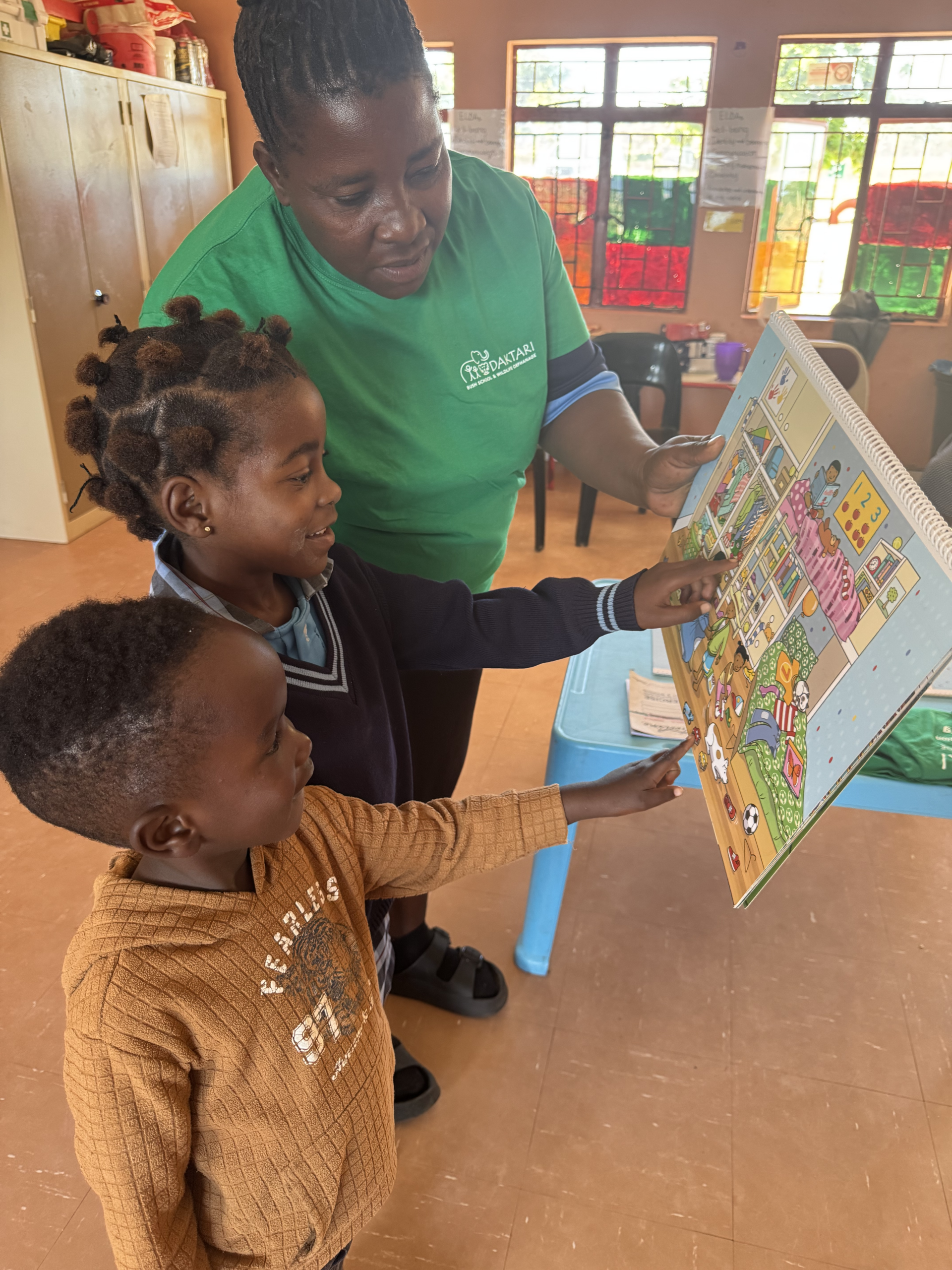
To support educators, DAKTARI partnered with The Reach Trust. Together, they introduced the Finding Thabo programme — an innovative set of educational resources. Since the tools are designed for children aged 3 to 6 years.
Finding Thabo uses interactive, play-based activities. These encourage children to recognise shapes, identify colours, observe details, and engage with learning. The activities are joyful, active, and suitable for settings with limited resources.
The curriculum was developed by a multidisciplinary team, including specialists in psychology, occupational therapy, and speech-language therapy. The result is a programme that is effective, accessible, and engaging for young learners.
Training childhood educators for success
Of course, providing materials is only the first step. DAKTARI understands that effective teaching requires confident educators. So, the team began with staff training.
Camilla, Patience, and Pretty took part in an intensive workshop with The Reach Trust. After training, they were ready to support local crèches.
Next, the team visited each site. At Swaranang, Mabine, and Mmakadi crèches, they led hands-on sessions with educators. Practitioners learned how to use the Finding Thabo resources. Meanwhile, they also gained insight into early brain development and daily learning routines.
Educators practised with the materials and asked questions. They became more confident. In addition, they set up a mobile app to track student progress, including attendance, skills learned, and developmental milestones.
This ensures the programme is measurable, adaptable, and impactful over time.
Early feedback and impact
The response from practitioners has been overwhelmingly positive. Of course, many praised the clarity and usability of the resources for childhood. They also reported feeling more confident in their role as early educators.
By bringing these tools directly into crèches, DAKTARI is filling a real gap. Children now receive structured stimulation that builds school readiness, confidence, and curiosity.
The pilot project currently reaches 110 children. Early results show promise. Children are engaging with learning. Educators are more confident. Communities are strengthened.
Looking ahead
Indeed, DAKTARI’s work does not stop here. In the long term, the organisation and The Reach Trust plan to develop new visual resources. Next, they will focus on environmental education for young children. This creates a natural bridge between early learning and conservation — linking cognitive development with love for nature.
This approach ensures that every child, from the earliest years, has a fair chance to grow, learn, and contribute.